The Walnut Street Stairs Have Been Closed Since 2020. This Sunday, They're Not.
"We are seeing some of the strongest ticket sales we've ever had," says Jason Patalonis of the Ramsey Hill Association, talking about a house tour that has run in some form for fifty years. That's a notable thing to say about an event whose main attraction is walking into other people's living rooms. But this year the claim holds up for a specific reason: for the first time in decades, the Summit Hill and Ramsey Hill neighborhood associations have combined what used to be two separate, alternating tours into one single afternoon. And tucked into that afternoon is a detail that has nothing to do with architecture tickets and everything to do with three years of deferred infrastructure. The Walnut Street Stairs, 170 steps down the bluff next to the James J. Hill House, have been closed since a section of retaining wall gave way in 2020. On Sunday, September 27, from noon to 6 p.m., they'll be open. Only for tour attendees. Only for six hours.
That's the shape of this year's Historic Hills House Tour: a long-running preservation event that has quietly changed what it's for, wrapped around a piece of public infrastructure that will be open to ticket holders for a single afternoon.
For most of its run, the house tour alternated. Summit Hill would host one year, Ramsey Hill the next, each association running its own version of the same idea a few blocks apart. This year that arrangement stopped. The two associations are presenting a single joint tour spanning both neighborhoods, and the timing lines up with a gap: the last tour was in 2024, when it drew more than 2,000 visitors, which means it's been two years since the doors were open at all. Combine a two-year wait with a first-ever merger and you get the ticket demand Patalonis is describing.
The count of what's actually included depends on which recap you read. Mpls.St.Paul Magazine puts the lineup at 21 stops. Other coverage counts "more than 15" homes and public spaces, and a separate report tallies 14 private residences, including one co-op building, plus the public sites layered on top. The gap isn't a contradiction so much as a counting question: whether you tally the Cathedral of Saint Paul, the University Club, and a handful of institutional stops as part of the "houses" or as their own category. Either way, this is the largest single-day version of the tour the two associations have run together.
The tour's own organizers describe its original purpose plainly: it began as a way to draw attention to structures that badly needed saving. Grand old houses in various states of decay, opened up so neighbors could see what was at stake before it was lost. That was the pitch for a long stretch of the tour's history.
It isn't the pitch anymore. As Patalonis puts it, homes of this age are always somewhere in the cycle of renovation or repair, but the tone in 2026 is no longer one of crisis. "Those of us who live in the neighborhood see ourselves as stewards of these homes," he says. "We won't be in them our entire lives, but we want to keep them watertight and leave them a little bit better than when we bought them for the next owners." That's a different job than the one the tour was built for. A rescue mission has an endpoint. Stewardship doesn't, which is presumably why the tour is still running fifty years later even though the "unrenovated structures" framing has aged out of use.
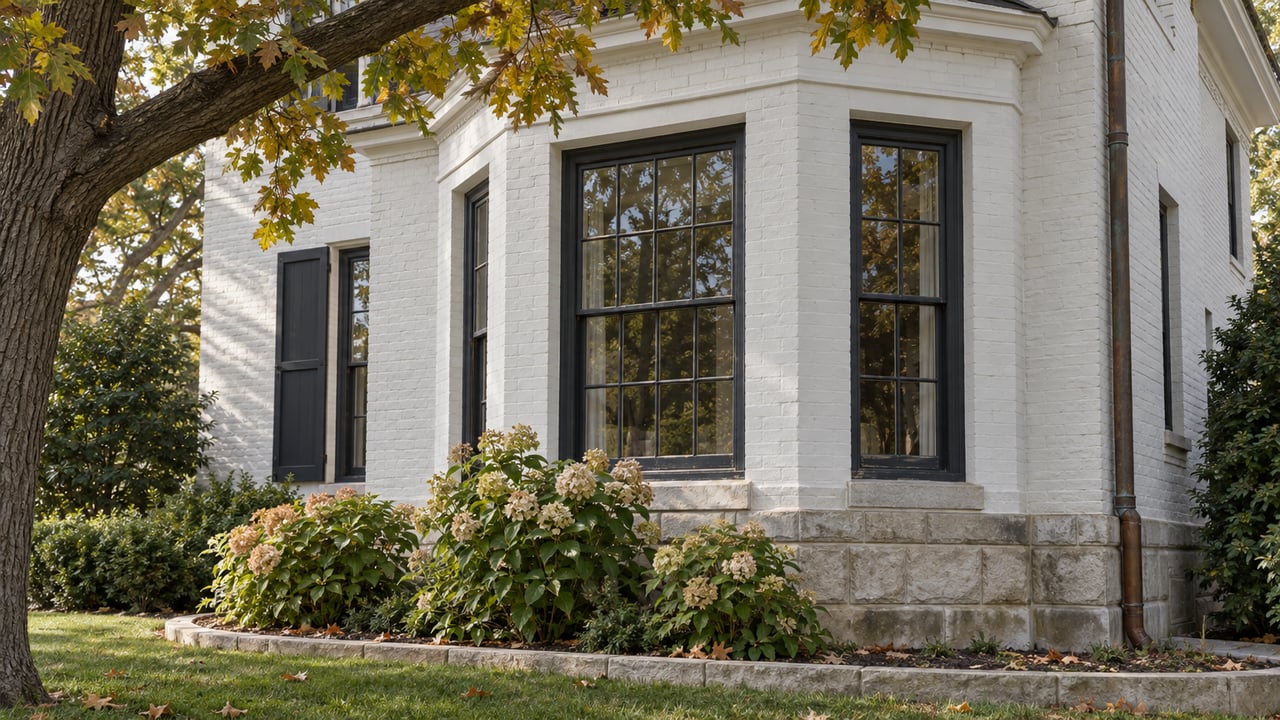
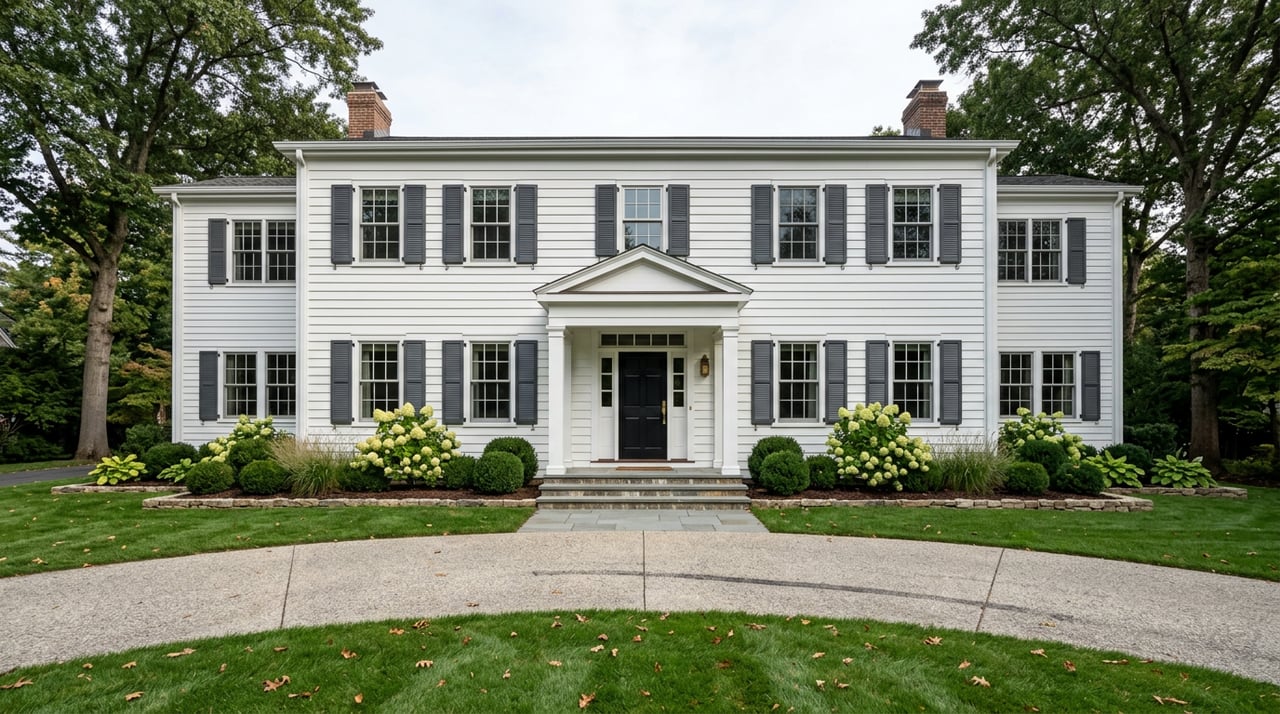
The lineup this year leans into that stewardship idea by putting some genuinely specific architectural history on display rather than just square footage. The Carl and Helen Schuneman House is a Tudor Revival with stucco siding and a steeply pitched roof designed by Allen Stem, the same architect behind New York's Grand Central Terminal. The Daniels/Peet House is the oldest structure on the tour, built in 1857, predating most of what's considered historic in this part of the city by decades. The Driscoll/Weyerhaeuser House brings Queen Anne asymmetry and a three-story tower. The Dr. Cornelius Williams House was designed by Thomas Holyoke, who trained under Cass Gilbert, the architect responsible for the Minnesota State Capitol.
One of this year's stops sits outside the usual mansion category entirely: a home at 881 Lincoln Avenue, built in 1899 and designed by Saunders A. Varnam, a single-family residence rather than one of the marquee estates. It's on the tour alongside the Rose family's house, which sits inside the overlapping boundary of both associations. Describing what the associations mean to the block, the homeowner points to round-robin dinners, croquet games, meetups at new restaurants, and history lectures as the texture of that overlap, adding that the same community work extends to people who never set foot in a member's living room, from dog walkers to anyone eating out or using the parks. That's a wider claim than "these are nice old houses." It's an argument that the tour's real product is the neighborhood infrastructure around the houses, not just the houses themselves.
Public stops round out the day: the Cathedral of Saint Paul, the University Club of St. Paul, Saint John the Evangelist Episcopal Church, the Germanic-American Institute, and Summit Manor, where the VIP brunch happens. The Daughters of the American Revolution will be stationed at the Nathan Hale statue at Summit and Portland avenues, on hand to talk through the Revolutionary War hero's legacy and the statue's ties to the city, a stop that has nothing to do with home tours and everything to do with the kind of civic detail this neighborhood tends to keep alive.
Of everything on the list, the Walnut Street Stairs are the one thing you genuinely cannot see any other day of the year. The stairway runs down the bluff next to the James J. Hill House, and it's been fenced off since 2020, when a section of the retaining wall collapsed. What's happening Sunday isn't a repair. It's a one-day opening that makes the stairs available exclusively to tour attendees for the six hours the tour runs. Anyone who's walked past the barricades on Walnut Street over the past few years and wondered what the view looks like from partway down the bluff gets an answer this weekend, and only this weekend.
The tour runs noon to 6 p.m. rain or shine. Ticket pick-up has moved: instead of the location listed in earlier planning materials, will-call is now at the Germanic-American Institute, 301 Summit Avenue, where organizers have added a coffee truck and a bagel truck for anyone picking up tickets on their way out.
A few things worth knowing before Sunday:
Tickets are available through the tour's official site, which is also the place to check same-day availability if the advance allotment sells out before Saturday night, which, given this year's pace, is a real possibility.
Whatever you make of the Schuneman House or the 1857 Daniels/Peet House, the stairs are the thing that won't repeat next year the same way. A house tour comes back around. A stairway closed since 2020 and open for a single afternoon is a narrower window than that.
If Sunday gets you curious about what's actually inside these blocks beyond the tour route, Natasha Cejudo has spent enough time on Summit and Grand to talk through the difference between a house that's been restored and one that's just been touched up, over coffee or over email, whichever you'd rather.

Market Update
All in good light
Market Update
Here's what closed between September 13 and September 21, neighborhood by neighborhood.

Blog
Hispanic Heritage Month, Mexican Independence Day, and the Humanitarian Award Minneapolis Just Earned
Market Update
Macalester-Groveland, Highland Park, Summit Hill, Summit University & Merriam Park | August 31–September 8, 2026
Natasha prides herself on an honest, transparent, and comprehensive approach based on mutual understanding and clear communication. She is patient, insightful, attentive, and responsive; her professionalism, humor, and candid approach make her a joy to work with. If you are considering a move this year or next, she would welcome a conversation with you!