In Summit Hill, the Historic District Rulebook Changes at Lexington Avenue
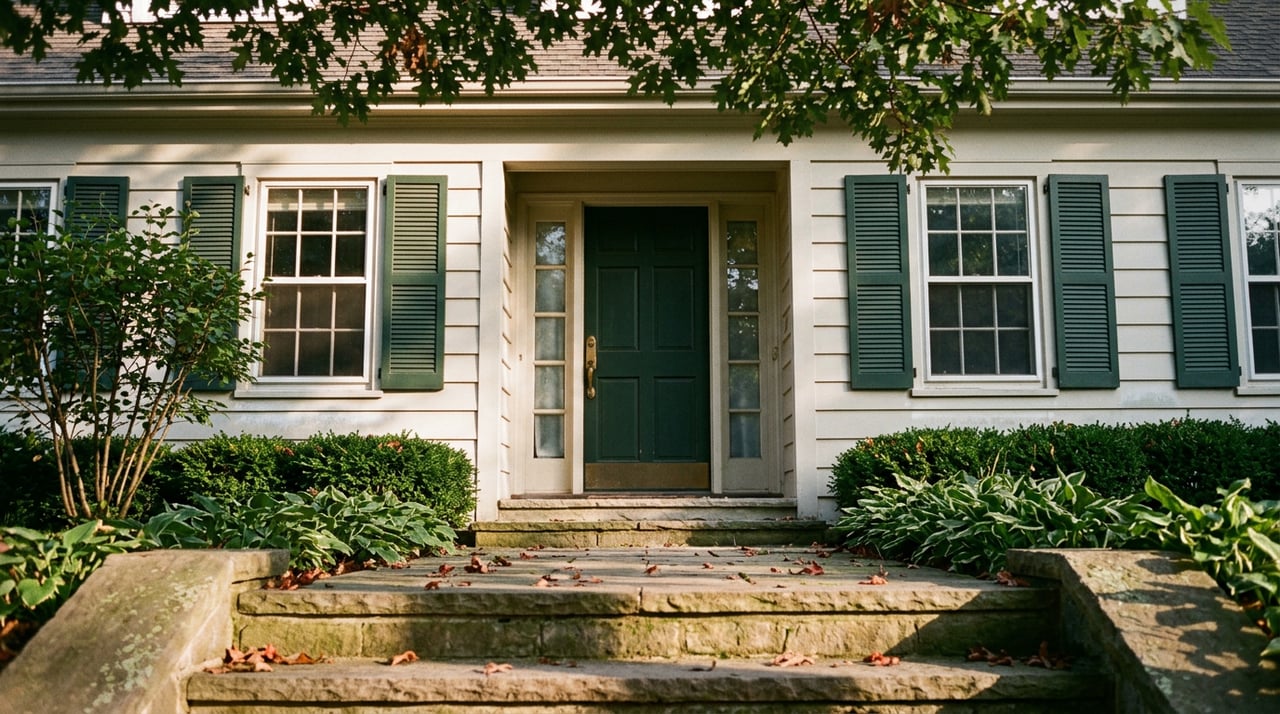
In 2014, George and Wendy Caucutt asked the city for something that sounds routine: permission to replace nine pairs of original casement windows on their home at 1621 Summit Avenue. The windows swung inward, showed their age, and the couple wanted new aluminum-clad units that would swing out instead. Saint Paul's Heritage Preservation Commission staff reviewed the application and recommended denial. The commission agreed. The Caucutts appealed to the City Council, and on September 17, 2014, the council held a public hearing to decide whether a window swap on a Tudor Revival house counted as an acceptable change or an erasure of the thing that made the house worth preserving.
That fight happened because 1621 Summit Avenue sits in a specific legal category most buyers never think to check: the Summit Avenue West Heritage Preservation District, created by the city in 1990. Walk a few blocks east, past Lexington Avenue, and you're standing in a different district entirely, one the city designated a decade earlier, in 1980, under a different name and a different guideline chapter. Same street. Same architectural era. Two separate rulebooks.
Summit Hill's most valuable real estate runs along Summit Avenue, and it feels like a single continuous corridor of Victorian mansions and Tudor Revivals. At the level that actually governs what you can and cannot do to your house, it isn't one corridor. The Summit Hill Association's own account of the neighborhood's preservation history draws the line precisely: the stretch of Summit Avenue east of Lexington Avenue became the Historic Hill Heritage Preservation District in 1980, and the stretch west of Lexington became the Summit Avenue West Heritage Preservation District a full decade later, in 1990.
Both districts answer to the same city ordinance and the same 13-member volunteer commission, and both operate on the same general philosophy that designation guides change rather than blocking it. But each has its own written design guidelines and its own decade of accumulated case precedent. Historic Hill's new-construction standards live in their own section of city code, separate from the guideline chapter the commission applied when it reviewed the Caucutts' windows. The starting document is different before anyone has looked at a single photograph of your porch.
The principle the commission leaned on in the Caucutt case gets at what these guidelines are actually protecting:
"the removal or alteration of distinctive architectural features should be avoided"
That single sentence did most of the work in deciding whether swapping in-swing casements for out-swing ones counted as an acceptable update or a loss of something the district existed to keep.
Summit Hill's housing stock explains why this particular fight recurs. Local housing-stock data for the district puts the median build year around 1912, with roughly nine out of ten homes constructed before 1940 and about three-quarters of them a full two stories. That means the original window sash on these houses is old, tall, and expensive to match.
The city's own guidance is unambiguous about what's allowed here. Repair takes precedence over replacement whenever a window can reasonably be saved. When replacement is genuinely necessary, standard mill-finish aluminum combination storm windows are not allowed. What the guidelines call for instead is a custom wooden storm window, built to match the primary sash as closely as possible, which is a materially different and more expensive product than what a hardware store sells.
That single rule is why a renovation budget for a Summit Hill Victorian rarely looks like a renovation budget for a comparable house outside the district. It's also why window work generates more commission agenda items than almost any other category of project. If you're buying here and the inspection turns up failing sash, the honest answer to "how much will new windows cost" has to account for a guideline that rules out the cheapest fix before you even get a quote.
The stakes for skipping the process show up clearly in the file on 260 Summit Avenue, the Louis W. and Maud Hill House, a Georgian Revival built in two phases, the rear portion in 1902 and a large front addition in 1913. In June 2016, a city building inspector observed the front sandstone entry steps and landing being demolished without a permit. Work stopped on the spot.
The owner subsequently proposed rebuilding the entry in concrete with a bluestone texture, reusing the existing handrails. Staff recommended denial of that plan, on the grounds that concrete construction would damage the historic character the sandstone contributed to the property. The eventual resolution required reconstruction in the original footprint, color, texture, and configuration, using the historic material rather than a substitute. Because the demolition had already happened without authorization, the city applied a doubled permit fee on top of the cost of doing the work over again, correctly this time.
For a buyer, the lesson isn't really about sandstone. It's about what "already renovated" can be hiding. A home with new steps, new siding, or a rebuilt porch looks finished on a listing photo. Whether that work was ever reviewed by the Heritage Preservation Commission is a separate question, and if it wasn't, the unresolved compliance issue transfers to whoever owns the house next.
Here's how the two districts compare at a glance:
| District | Side of Lexington Ave | Local Designation Year | What It Means at the Permit Counter |
|---|---|---|---|
| Historic Hill Heritage Preservation District | East | 1980 | Own guideline chapter; longer enforcement history, including the 260 Summit Avenue steps case |
| Summit Avenue West Heritage Preservation District | West | 1990 | Own guideline chapter; newer district, including the 1621 Summit Avenue window case |
None of this means Summit Hill is a difficult place to own a house. Designation guides change, it doesn't freeze a property in amber, and plenty of owners repair porches, replace roofs, and update kitchens without incident. What it means is that the address matters more than the street name.
Before you make an offer on a Summit Hill property, it's worth finding out which of the two districts the house sits in, since the Lexington Avenue line isn't visible from the curb. If you're planning exterior work of any kind, the city's own advice is to contact the Heritage Preservation office before you talk to a contractor, not after, because a conversation with staff early can save a design that would otherwise get rejected at the design-review stage. Simple projects like a shed or a fence typically move through review in five to ten business days once a complete application is filed. Additions, garages, and anything more involved run three to six weeks, and that clock only starts after Heritage Preservation sign-off, which adds its own weeks on top.
If you're touring a house with visible exterior updates already in place, ask directly whether that work went through the Heritage Preservation Certificate process. It's a fair, ordinary question for a home in either district, and the answer tells you whether you're buying a finished project or inheriting an open one.
Does a National Register listing by itself restrict what I can change? Not on its own. National Register status is largely honorary for a private owner and doesn't limit renovations unless federal funding, federal permits, or federal tax credits are part of the project. If the same house is also locally designated, through Historic Hill or Summit Avenue West, the city's rules apply regardless of the federal listing. We've written more about how that distinction plays out for sellers of historic homes in neighboring Summit-University.
How do I confirm which district a specific address falls into? Ask the Heritage Preservation office directly rather than assuming based on which side of the street looks older. The two districts share a boundary at Lexington Avenue, but the exact line for an individual parcel is worth confirming before you plan a project or price a renovation.
What if I want to make a change the guidelines seem to discourage? Designation doesn't mean no. It means the commission has to find that a proposed change won't damage what makes the property or the district significant. Projects that seemed straightforward, like new windows, have gone all the way to a City Council hearing when the commission and the homeowner disagreed. Bringing a plan to staff early, before signing a contractor, is the step that avoids that outcome.
If you're weighing a Summit Hill purchase, or you own a historic property here and want a clear-eyed read on what a renovation or a sale will actually require, Natasha Cejudo has spent years working through exactly this kind of detail with Summit Hill owners. Let's connect. Start the conversation.
Blog
September 27 to October 5, 2026

Market Update
All in good light
Market Update
Here's what closed between September 13 and September 21, neighborhood by neighborhood.

Blog
Hispanic Heritage Month, Mexican Independence Day, and the Humanitarian Award Minneapolis Just Earned
Natasha prides herself on an honest, transparent, and comprehensive approach based on mutual understanding and clear communication. She is patient, insightful, attentive, and responsive; her professionalism, humor, and candid approach make her a joy to work with. If you are considering a move this year or next, she would welcome a conversation with you!